
Clogged gutters can lead to more damage than many homeowners realize. When water can’t drain properly, it can overflow and damage roofs, siding, landscaping, and even foundations. Studies show that nearly 40 percent of homes have experienced issues related to clogged gutters, including leaks and structural concerns.
That’s why many homeowners turn to leaf guard solutions to help protect their homes. These products are designed to block debris while allowing rainwater to flow freely. With so many options available, choosing the right gutter protection can feel overwhelming.
This guide breaks down the most common types of gutter guards, how they work, and what to consider when deciding what’s best for your home.
Key Takeaways
- Gutter guards help prevent clogs that can cause roof, siding, and foundation damage
- Different types of gutter guards work in different ways, including screen, mesh, reverse curve, brush, and foam
- The best gutter guard depends on your tree coverage, roof design, and local debris
- Gutter guards reduce cleaning, but still need occasional inspection and maintenance
- Choosing the right material and installation method helps protect your home long-term
What Are Gutter Guards
Gutter guards are protective products that sit on top of or inside your gutters. Their purpose is straightforward: keep leaves, twigs, and debris out while letting rainwater pass through.
A well-designed gutter guard system helps direct water safely away from your home, reducing the risk of overflow and water damage. When gutters stay clear, they work as intended, protecting your roof, siding, foundation, and landscaping.
How Gutter Guards Support Proper Drainage
Gutter guards rely on screens, mesh, or solid surfaces with openings that allow water in while blocking debris. Leaves, pine needles, dirt, seed pods, and even small roofing granules are common causes of clogs. Over time, this buildup can stop water from draining, leading to overflow and damage.
Effective gutter protection focuses on gutter debris prevention, stopping buildup before it becomes a costly problem.
Why Clogged Gutters Can Damage Your Home
When gutters clog, water has nowhere to go. Instead of flowing through downspouts, it spills over the edges or backs up under roofing materials.
This can cause rotting fascia boards, roof leaks, stained siding, foundation erosion, and even basement water intrusion. Keeping gutters clear is essential for protecting your entire drainage system.
Screen Gutter Guards
Screen gutter guards are one of the most common and affordable types of gutter guards. They are usually made from metal or plastic screens that sit over your gutters. The screen has small holes that let rainwater in while blocking larger debris.
Pros and Cons of Screen Gutter Guards
Screen gutter guards are most effective for homes with light debris and minimal tree cover. If your yard lacks many trees or has fallen leaves, screen guards can be a simple and cost-effective solution.
| Pros | Cons |
| Easy to install | Smaller debris can still get through |
| Affordable option for most homeowners | Screens may clog over time |
| Blocks leaves and larger debris | Not ideal for heavy rain or debris |
| Widely available | May need occasional cleaning |
Mesh Gutter Guards
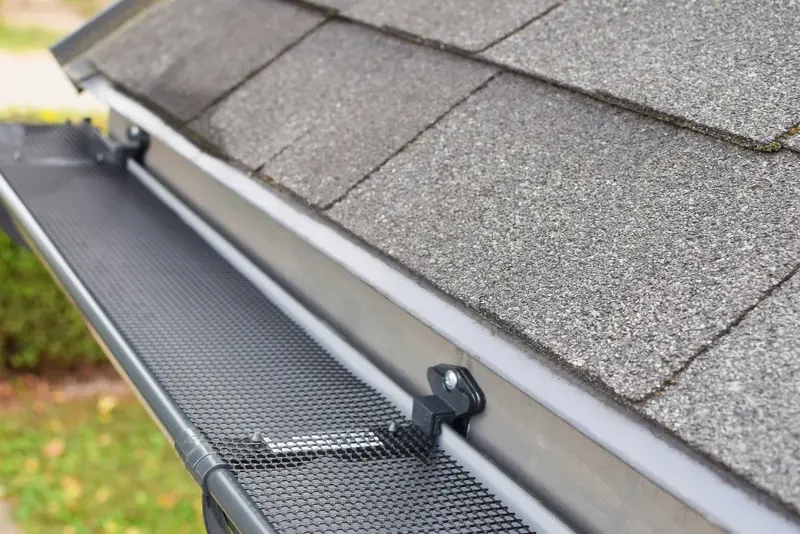
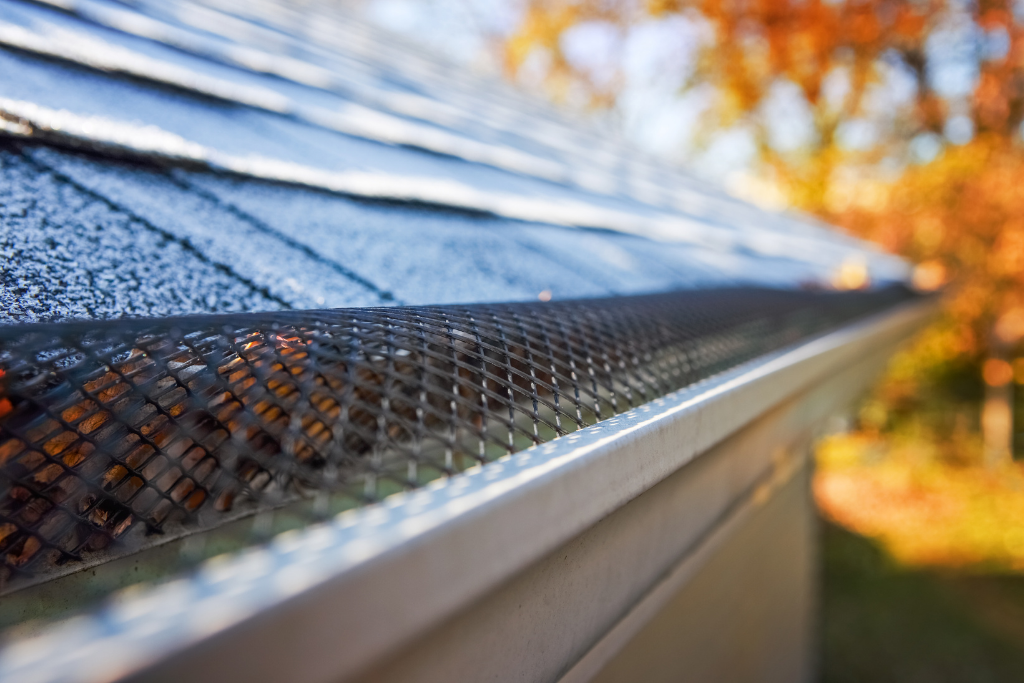
Mesh gutter guards use a metal screen with very small holes to keep debris out while allowing water to flow into your gutters. These guards sit on top of your gutters and act as a filter, blocking leaves, twigs, and other debris before they can cause clogs.
Some mesh systems use standard mesh, while others use micro-mesh. Both are designed to improve gutter performance, but they work a little differently.
Micro-Mesh vs. Standard Mesh
Standard mesh has larger openings that block leaves but may allow dirt or pine needles through. Micro-mesh uses finer openings to block even small debris while still handling heavy rainfall efficiently.
Mesh systems are ideal for homes surrounded by trees or in areas with frequent leaf drop.
Reverse Curve Gutter Guards
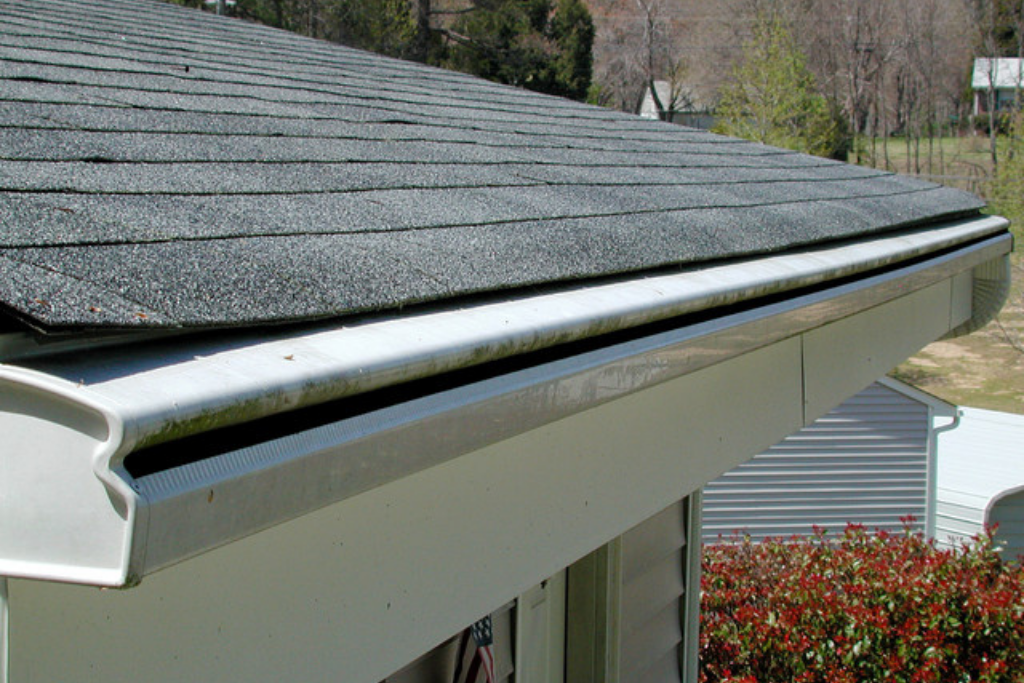
Reverse curve gutter guards use a solid cover and a curved edge to control how water enters your gutters. Instead of falling straight in, rainwater flows over the curved surface and follows it into the gutter using surface tension. Leaves and debris slide off the edge and fall to the ground.
This design helps keep large debris out while still allowing water to drain properly.
How Reverse Curve Guards Direct Water
Reverse curve guards rely on water adhesion, also known as surface tension. As rain flows over the curved edge, it clings to the surface and wraps around into the gutter opening.
At the same time, leaves, twigs, and other debris do not stick to the surface. They continue to slide off the guard, helping keep your gutters clear.
Brush Gutter Guards
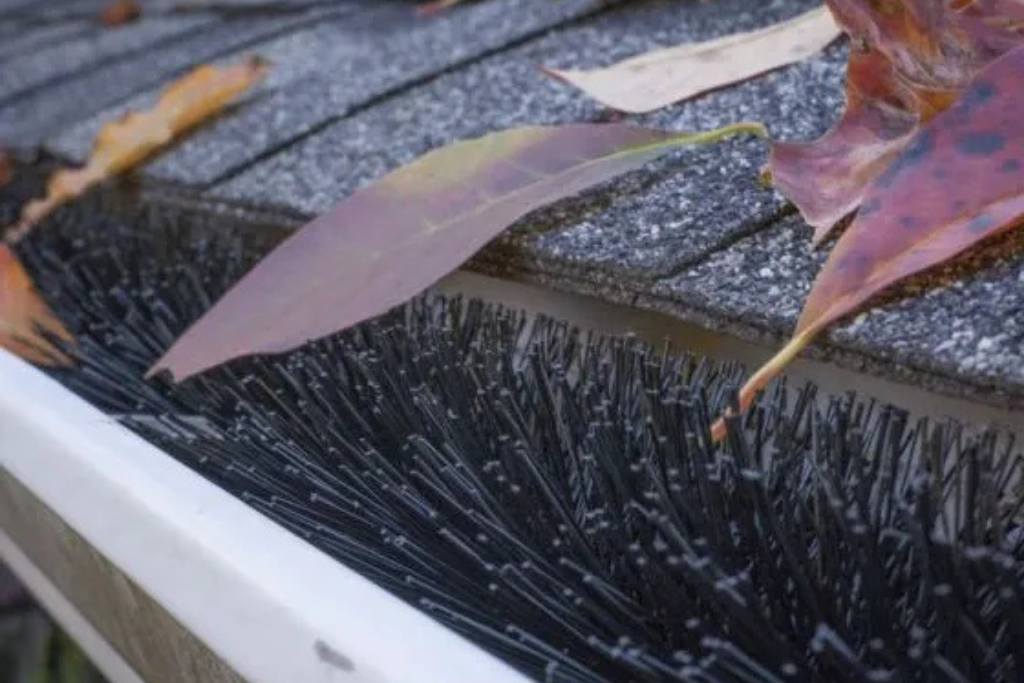
Brush gutter guards are made of cylindrical brushes that sit inside your gutters. The bristles block leaves and large debris while still allowing water to flow through. They are simple in design and easy to adjust or remove when cleaning is needed.
Ease of Installation and Cost
Brush guards are very DIY-friendly. You can usually install them yourself without professional help. They are also one of the lower-cost gutter guard options, making them popular for homeowners looking for a budget-friendly solution.
Foam Gutter Guards
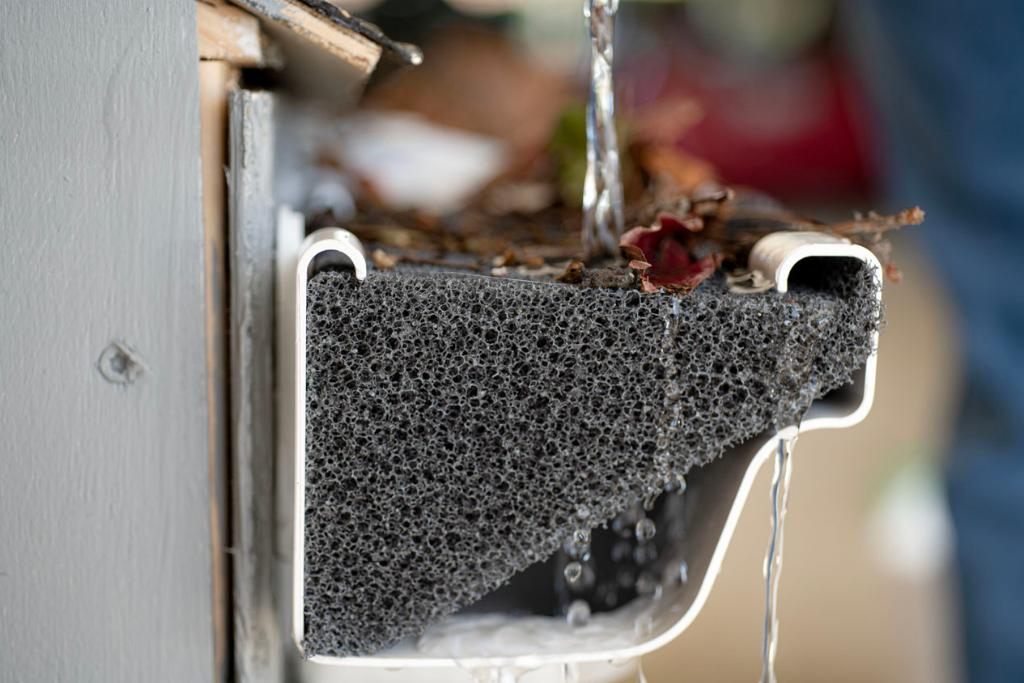
Foam gutter guards are made of insert-style foam pieces that fit directly into your gutters. The foam blocks leaves and larger debris while letting rainwater pass through.
How Foam Gutter Guards Filter Water
The foam is porous, which means water can flow through it while debris is trapped on the surface. Foam guards are easy to install and remove, making maintenance relatively simple, though they may require occasional cleaning to prevent buildup.
Comparing Gutter Guard Materials
Not all gutter guards are made the same. The material you choose can affect how long your guards last, how well they perform, and how much maintenance they need.
This table shows the main differences between plastic, aluminum, and stainless steel guards, helping you choose the right material for your home’s needs:
| Material | Strength | Lifespan | Rust Resistance |
| Plastic | Low | 5–10 years | Excellent, won’t rust |
| Aluminum | Medium | 10–20 years | Good, may corrode over time |
| Stainless Steel | High | 20+ years | Excellent, highly resistant to rust |
Choosing the Best Gutter Guards for Your Home
Some systems require professional help when installing gutter guards, while others are homeowner-friendly. When selecting gutter protection, consider the following requirements.
- Roof pitch and design
- Tree coverage around your home
- Types of debris common in your area
- Budget and long-term value
- Willingness to maintain or inspect gutters
Best Gutter Guards FAQs
What type of gutter guard lasts the longest?
Stainless steel and high-quality aluminum guards tend to last the longest. Stainless steel is highly resistant to rust and corrosion, making it a top choice for durability. Properly installed aluminum guards can also last decades if maintained occasionally.
Do gutter guards eliminate cleaning completely?
No, gutter guards reduce cleaning but do not eliminate it. Some smaller debris, like pine needles or seeds, can still get through, especially with standard mesh or screen guards. Periodic inspection is recommended to ensure gutters stay clear and water flows properly.
Are gutter guards worth the cost?
Yes, gutter guards can be worth the investment because they protect your home from water damage. They save time and reduce the frequency of gutter cleaning. While upfront costs vary, the long-term protection and reduced maintenance often make them a good value.
Can gutter guards work in heavy rain?
Yes, most gutter guards are designed to handle heavy rain. Reverse curve and micro-mesh guards are particularly effective at directing water into the gutter while keeping debris out. Proper installation is important to ensure that water flows correctly and does not overflow.
Should gutter guards be professionally installed?
It depends on the type of gutter guard. Simple options like brush or foam guards can often be installed by homeowners, while reverse curve or custom micro-mesh guards usually require professional installation. Professional installation can help maximize performance, ensure warranties, and prevent costly mistakes.
Choosing the Best Gutter Guards for Every Home
Choosing the right gutter guards can protect your home from water damage and reduce maintenance time. From screen and mesh guards to reverse curve and foam options, each type has unique benefits depending on your roof, tree coverage, and budget. Understanding the differences helps homeowners make informed decisions that suit their property and lifestyle.
As a custom home builder in Houston, we help homeowners select the right materials and systems to safeguard their homes from debris and water damage when building their home.
Planning to build a custom home? Are your gutters designed to protect them long-term? Get in touch today to send us a consultation request.

Nick Picklo, son of Terry Picklo, grew up immersed in the world of construction. With a keen passion for construction science, he continuously explores emerging technologies and sustainable building practices to enhance every project. His commitment to staying ahead of industry changes drives innovation in residential construction, ensuring that each home reflects the latest advancements in quality, efficiency, and design.